


Overview
Subnational tax autonomy is a cornerstone of a viable system of fiscal federalism. The underlying principle is that spending by constituent units in a federal or quasi federal country is paid for by revenues that are under the control of that unit. Economists recommend that the taxation base remain the same across all constituent units in a country to minimize administrative and compliance costs as well as tax avoidance activities.
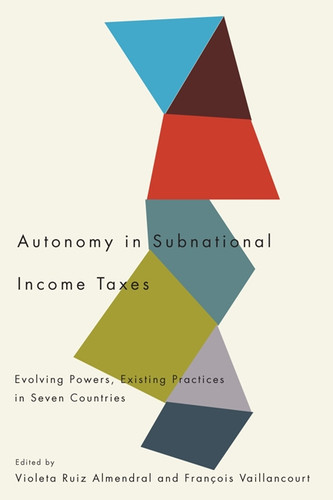
There are important differences between constituent units of federal or quasi-federal states in OECD countries with respect to both powers for taxation of personal income and the use made of such powers, if any. Autonomy in Subnational Income Taxes examines tax autonomy as a powerful tool in setting tax rates. Two key issues are examined in detail: first, why proposals giving more power to set tax rates have been implemented (Spain), put forward (UK), stalled (Belguim), or set aside (Germany), and second, how such powers are used in federations whose constituent units have them (Canada, Switzerland, and the United States).
While major retailers like Amazon may carry Autonomy in Subnational Income Taxes (Evolving Powers, Existing Practices in Seven Countries), we specialize in bulk book sales and offer personalized service from our friendly, book-smart team based in Portland, Oregon. We’re proud to offer a Price Match Guarantee and a streamlined ordering experience from people who truly care.
We’re trusted by over 75,000 customers, many of whom return time and again. Want proof? Just check out our 25,000+ customer reviews—real feedback from people who love how we do business.
Prefer to talk to a real person? Our Book Specialists are here Monday–Friday, 8 a.m. to 5 p.m. PST and ready to help with your bulk order of Autonomy in Subnational Income Taxes (Evolving Powers, Existing Practices in Seven Countries).