


Overview
'Thank you, Joey, for getting your dad off his arse to write this book.' HUGH BONNEVILLE
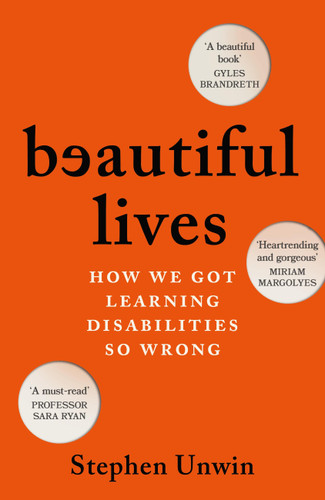
'A beautiful book - powerful, persuasive, illuminating, moving.' GYLES BRANDRETH
'This is a wonderful and important book. Beautifully written, of course; but full of pain and joy, concern and celebration.' SIMON RUSSELL BEALE
'A powerful, multi-faceted, myth-busting account of the most marginalised and belittled out-group in modern society.' SIMON JARRETT, author of Those They Called Idiots
For much of history, people with learning disabilities have been regarded as unworthy of interest - often seen as a threat to the social order and sometimes dismissed as barely human. While recent years have seen an improvement, learning-disabled people are still treated as fundamentally different.
Beautiful Lives is a personal and pragmatic account, told through the eyes of a father whose son has severe learning disabilities. From early civilisation to the chilling realities of twentieth-century eugenics, this powerful book uncovers a startling and rarely told history - one deeply embedded in the challenges still faced today.
Unwin shapes this history into a powerful story of love, lived experience and the long struggle for a better future.
While major retailers like Amazon may carry Beautiful Lives (How We Got Learning Disabilities So Wrong: The startling and rarely told history of learning disabilities 'Both heartrending and gorgeous' MIRIAM MARGOLYES), we specialize in bulk book sales and offer personalized service from our friendly, book-smart team based in Portland, Oregon. We’re proud to offer a Price Match Guarantee and a streamlined ordering experience from people who truly care.
We’re trusted by over 75,000 customers, many of whom return time and again. Want proof? Just check out our 25,000+ customer reviews—real feedback from people who love how we do business.
Prefer to talk to a real person? Our Book Specialists are here Monday–Friday, 8 a.m. to 5 p.m. PST and ready to help with your bulk order of Beautiful Lives (How We Got Learning Disabilities So Wrong: The startling and rarely told history of learning disabilities 'Both heartrending and gorgeous' MIRIAM MARGOLYES).