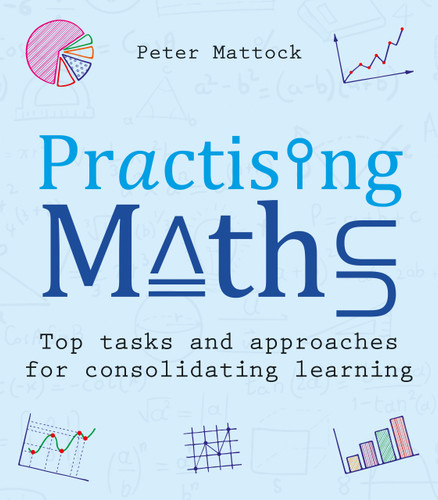
The first aim of many maths curricula is for pupils to become fluent in the fundamentals of mathematics, including through varied and frequent practise with increasingly complex problems over time, so that pupils develop conceptual understanding and the ability to recall and apply knowledge rapidly and accurately. In “ Conceptual Maths” , Peter Mattock wrote about the importance of pupils learning about mathematical concepts, rather than just “ doing” maths.
This isn’ t to say that doing maths is not important, simply that if all pupils learn through a mathematical education is to “ do” stuff – carry out calculations and follow procedures – then this isn’ t much of a mathematical education. To receive a true mathematical education, pupils need to learn both ‘ about’ maths and ‘ to do’ maths. Practice is crucial, however, regardless of whether pupils are learning ‘ about’ or ‘ to do’ maths.
There is a widely believed and persistent myth that it takes 10,000 hours of practise to master a particular skill. Of course, what the people quoting the 10,000 hours rule often fail to mention is that, in addition to the time spent practising, the type of practise is just as important. However, this presents several questions for math teachers: what type or types of practise do pupils need in order to master different mathematical ideas? How does the concept that students are learning affect the type of practise that we might offer them? What sort of issues do we need to consider when designing practise activities for pupils? Generally, there are two broad types of practice:
• Type 1 involves the rehearsal of core facts, methods and strategies that can be used to complete exercises and solve problems now and in the next stage of education
• Type 2 includes explaining, justifying and proving concepts using informal and diagrammatic methods, parsing and derivation of numbers
This book concentrates on type 2 practise and provides teachers with opportunities beyond the practise of “ methods and strategies that can be used to complete exercises” arguably what the bulk of practise in the maths classroom seems to be focused on. In doing so, teachers will gain the knowledge and confidence to design and choose tasks that will be effective in ensuring pupils’ practise leads to the deep understanding of maths that we hope to develop in all learners.
Contents include:
1. Conceptual variation.
2. Procedural variation.
3. Deliberate practise.
4. Subordinating practise.
5. Interleaving and interweaving.
6. Guiding practise.
7. Spacing practise.
8. Opportunities for reasoning and problem solving.
9. Rich tasks.
10. Goal-free problems.
11. The role of SLOP (Shed Loads of Practise) and increasingly difficult questions.
12. The role of manipulatives and representation in practise.
While major retailers like Amazon may carry Practising Maths (Top tasks and approaches for consolidating learning), we specialize in bulk book sales and offer personalized service from our friendly, book-smart team based in Portland, Oregon. We’re proud to offer a Price Match Guarantee and a streamlined ordering experience from people who truly care.
We’re trusted by over 75,000 customers, many of whom return time and again. Want proof? Just check out our 25,000+ customer reviews—real feedback from people who love how we do business.
Prefer to talk to a real person? Our Book Specialists are here Monday–Friday, 8 a.m. to 5 p.m. PST and ready to help with your bulk order of Practising Maths (Top tasks and approaches for consolidating learning).