


Overview
Charlie is a genius violinist, the orphaned or abandoned offspring (probably) of a Cambodian woman and a black American GI, found in baggage claim at JFK. Shortly before the story opens he has endured a ridiculously humiliating incident that put him off his instrument—as part of a string quartet, he was sent unaware by the Musicians’ Union to “open” for a reunion tour of over-the-hill Hessian metal-gods Volstagg (based on Meat Loaf), who threw the classical musicians offstage. Biding his time until he can afford to leave Philth Town (a tweaked Philadelphia), he now works in a deli run by a despotic Dutchman and lives in a boarding house (The Desmon), among whose other residents are Armless Rob (self-explanatory), Yancey Fishnet (dominatrix), Emmylou Mattressback (basically what you’d expect), and others. Including Tinsel Greetz, an ill-informed anarchist prone to disaster, and Charlie's best friend.
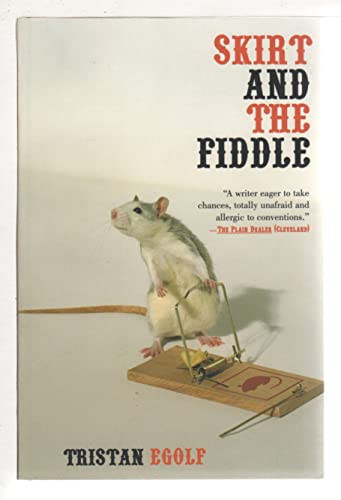
As the story opens, Tinsel has founded a “barter system” economy for the various misfits in the Desmon and its affiliated businesses (The Grain Shack, the dive bar Maxine’s, a veterinary office) which results in the destruction of the Shack, a huge pack of dogs being left at the Desmon for Tinsel to deal with, threats of lawsuits and bodily harm, and Tinsel hiding out with his inexplicably understanding girlfriend Zelda. Charlie has been supplementing his deli paycheck via the “Willard Rounds,” the illegal method Philth Town’s Sanitation Department has evolved to deal with its out-of-control sewer rat problem: paying “slag-hands” to go down into the sewers armed with pipes and duffel bags and pays them a fee per quantity of dead rats (“Willard,” above, and “Ben,” as the rats are collectively called, are references to the movies Willard [1971, recently remade starring Crispin Glover] and Ben [1972] in which rats avenge the wrongs done to their human guardians). Tinsel is persona non grata and has lost his gig playing guitar at a bar, so Charlie initiates him into life as a slag-hand, ending in a ridiculously generous haul. To celebrate, Charlie and Tinsel get drunk and—unfortunately—trash Zelda's apartment just as a foreign investor is about to come buy some of her photographs for a French media conglomerate. Furious, Zelda throws them out whereupon they are beaten up by skinheads and end up waking up the next morning worse for wear in a hotel room in one of the poshest hotels in the city, with Louise (the “investor,” who's actually a French journalist). Charlie is instantly, stupidly in love with Louise, reduced to stammering incoherence and suddenly relating to the lyrics of “Total Eclipse of the Heart.” And strange as it might seem, it appears to be mutual.
Over the next forty-eight hours, Charlie is on a hellbent journey from disaffected, self-destructive, downwardly mobile slacker to redeeming his former creativity and maturity, as Tinsel and Louise vie for his loyalties. Along the way there are hilarious scenes where the two cleaned-up slag-hands attempt to navigate the stressful environment of a nice restaurant (complete with compulsive table-crumbers and a schmaltzy table-side troubadour who receives his comeuppance when Charlie takes his violin and bears down with classical fury, getting a standing ovation); the three play a vicious game of Death Match culminating in watching a Felix Trinidad-Hector Camacho fight at Maxine’s; and a final denouement in which fallen cinematic genius Delvin Corollo is shooting a vapid costume drama outside the hotel (based on Martin Scorsese and The Age of Innocence) and Tinsel and Charlie conspire to destroy the shoot.
Brewing under the surface, Charlie is being forced to confront the “hate” part of his “love-hate” relationship with his extremely trying friend. Louise has offered to take him with her when she leaves town—to cover an uprising in New Guinea, and whatever comes next. Tinsel shows no sign of abandoning his hare-brained schemes—he’s planning to rob a bank now—and Charlie has become disgusted with himself for putting up with Tinsel’s behavior, which includes not only a lack of hygiene and normalcy, but more seriously a streak of casual misogyny and xenophobia that Charlie has always assumed was a joke, but now is not so sure. In a final scene both hilarious and poignant, Charlie takes his revenge on the evil Dutchman who persecuted him at the deli and gives Tinsel the means to attempt the bank job—in other words, enough rope to hang himself.
As the story opens, Tinsel has founded a “barter system” economy for the various misfits in the Desmon and its affiliated businesses (The Grain Shack, the dive bar Maxine’s, a veterinary office) which results in the destruction of the Shack, a huge pack of dogs being left at the Desmon for Tinsel to deal with, threats of lawsuits and bodily harm, and Tinsel hiding out with his inexplicably understanding girlfriend Zelda. Charlie has been supplementing his deli paycheck via the “Willard Rounds,” the illegal method Philth Town’s Sanitation Department has evolved to deal with its out-of-control sewer rat problem: paying “slag-hands” to go down into the sewers armed with pipes and duffel bags and pays them a fee per quantity of dead rats (“Willard,” above, and “Ben,” as the rats are collectively called, are references to the movies Willard [1971, recently remade starring Crispin Glover] and Ben [1972] in which rats avenge the wrongs done to their human guardians). Tinsel is persona non grata and has lost his gig playing guitar at a bar, so Charlie initiates him into life as a slag-hand, ending in a ridiculously generous haul. To celebrate, Charlie and Tinsel get drunk and—unfortunately—trash Zelda's apartment just as a foreign investor is about to come buy some of her photographs for a French media conglomerate. Furious, Zelda throws them out whereupon they are beaten up by skinheads and end up waking up the next morning worse for wear in a hotel room in one of the poshest hotels in the city, with Louise (the “investor,” who's actually a French journalist). Charlie is instantly, stupidly in love with Louise, reduced to stammering incoherence and suddenly relating to the lyrics of “Total Eclipse of the Heart.” And strange as it might seem, it appears to be mutual.
Over the next forty-eight hours, Charlie is on a hellbent journey from disaffected, self-destructive, downwardly mobile slacker to redeeming his former creativity and maturity, as Tinsel and Louise vie for his loyalties. Along the way there are hilarious scenes where the two cleaned-up slag-hands attempt to navigate the stressful environment of a nice restaurant (complete with compulsive table-crumbers and a schmaltzy table-side troubadour who receives his comeuppance when Charlie takes his violin and bears down with classical fury, getting a standing ovation); the three play a vicious game of Death Match culminating in watching a Felix Trinidad-Hector Camacho fight at Maxine’s; and a final denouement in which fallen cinematic genius Delvin Corollo is shooting a vapid costume drama outside the hotel (based on Martin Scorsese and The Age of Innocence) and Tinsel and Charlie conspire to destroy the shoot.
Brewing under the surface, Charlie is being forced to confront the “hate” part of his “love-hate” relationship with his extremely trying friend. Louise has offered to take him with her when she leaves town—to cover an uprising in New Guinea, and whatever comes next. Tinsel shows no sign of abandoning his hare-brained schemes—he’s planning to rob a bank now—and Charlie has become disgusted with himself for putting up with Tinsel’s behavior, which includes not only a lack of hygiene and normalcy, but more seriously a streak of casual misogyny and xenophobia that Charlie has always assumed was a joke, but now is not so sure. In a final scene both hilarious and poignant, Charlie takes his revenge on the evil Dutchman who persecuted him at the deli and gives Tinsel the means to attempt the bank job—in other words, enough rope to hang himself.
While major retailers like Amazon may carry Skirt and the Fiddle, we specialize in bulk book sales and offer personalized service from our friendly, book-smart team based in Portland, Oregon. We’re proud to offer a Price Match Guarantee and a streamlined ordering experience from people who truly care.
We’re trusted by over 75,000 customers, many of whom return time and again. Want proof? Just check out our 25,000+ customer reviews—real feedback from people who love how we do business.
Prefer to talk to a real person? Our Book Specialists are here Monday–Friday, 8 a.m. to 5 p.m. PST and ready to help with your bulk order of Skirt and the Fiddle.