


Overview
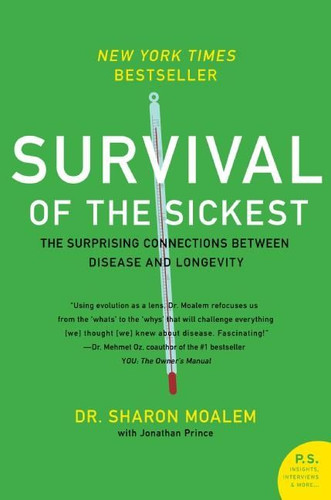
Joining the ranks of modern myth busters, Dr. Sharon Moalem turns our current understanding of illness on its head and challenges us to fundamentally change the way we think about our bodies, our health, and our relationship to just about every other living thing on earth, from plants and animals to insects and bacteria.
So why does disease exist? Moalem proposes that most common ailments—diabetes, hemochromatosis, cystic fibrosis, sickle cell anemia—came into existence for very good reasons. At some point they helped our ancestors survive some grand challenge to their existence. Examining the evolution of man, Moalem reveals the role genetic and cultural differences have played in the health and well-being of various races, including their susceptibility to disease.
With mesmerizing insight, Moalem offers groundbreaking insight into :
• How diabetes may be a biproduct of a mechanism that helped humans survive the Ice Age
• Why African Americans living in the north might suffer from vitamin D deficiencies,
• Why Asians can’t drink as much alcohol as Europeans
Revelatory, utterly engaging, and timely—Moalem ponders strongN1, the emerging Avian Flu virus—Why Redheads Feel More Pain and Asians Can’t Drink will irrevocably change the way we think about our bodies and ourselves.
While major retailers like Amazon may carry Survival of the Sickest (The Surprising Connections Between Disease and Longevity), we specialize in bulk book sales and offer personalized service from our friendly, book-smart team based in Portland, Oregon. We’re proud to offer a Price Match Guarantee and a streamlined ordering experience from people who truly care.
We’re trusted by over 75,000 customers, many of whom return time and again. Want proof? Just check out our 25,000+ customer reviews—real feedback from people who love how we do business.
Prefer to talk to a real person? Our Book Specialists are here Monday–Friday, 8 a.m. to 5 p.m. PST and ready to help with your bulk order of Survival of the Sickest (The Surprising Connections Between Disease and Longevity).